COMPASSIONATE, EVIDENCE‑BASED CARE & SUPPORT IN NEWCASTLE & LAKE MACQUARIE
Polycystic Ovary Syndrome (PCOS)
Practical, non‑judgemental PCOS care — nutrition, movement and metabolic support.
Personalised Support for PCOS
Take control of PCOS symptoms with evidence-based, non-judgemental nutrition and lifestyle strategies.
Polycystic Ovary Syndrome (PCOS) is a common hormone condition that can cause irregular or absent periods, ovulatory problems, raised androgens (acne, excess hair growth) and signs of insulin resistance. Nutrition is a cornerstone of management – improving carbohydrate quality, meal timing and overall dietary pattern can help steady blood glucose, support ovulation and lower metabolic risk. At Ausclin, we emphasise evidence‑based strategies and also consider emotional wellbeing, because PCOS often affects mood and self‑esteem. Early recognition and coordinated care can really improve long‑term outcomes. We work with you to set realistic, personalised goals and monitor progress over time.
Our PCOS care – available in Newcastle, Lake Macquarie and via telehealth – focuses on non‑judgemental, evidence‑based guidance for carbohydrate portioning and timing, anti‑inflammatory eating, and safe supplement advice when indicated. We help break dieting cycles, design sustainable activity plans, and work with your medical team for coordinated fertility or metabolic care. Appointments typically include a detailed assessment of symptoms, diet and lifestyle, and a clear plan you can start right away. Ongoing follow‑up ensures adjustments are made as your needs change.
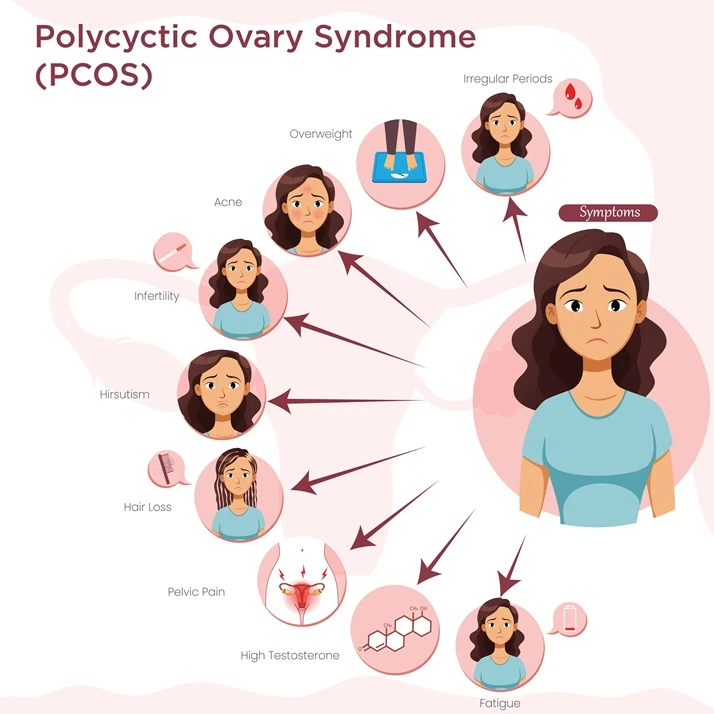
Common signs
Polycystic Ovary Syndrome (PCOS) can present with a variety of symptoms that often affect different aspects of your health and wellbeing. Recognising these common signs early can empower you to seek the right support and make informed decisions about your care. Below are key PCOS symptoms to watch for, helping you understand what to discuss with your healthcare provider for effective management.
How we can help
We provide personalised support for PCOS that empowers you to take charge of your health and wellbeing. Our team offers individualised nutrition and lifestyle strategies to improve insulin sensitivity, practical carbohydrate guidance, and non-shaming support for weight-related concerns. We also deliver evidence-based advice on supplements and anti-inflammatory nutrition, plus guidance on finding enjoyable, sustainable physical activity that works for you.
Call To Action
Have questions about PCOS or managing symptoms? Get in touch for friendly, evidence‑based advice.
We are Here to Help
Frequently Asked Questions
Below are common questions people ask about Medical Nutrition Therapy (MNT), how our Accredited Practising Dietitians (APDs) work, and how to access care — including Medicare Chronic Disease Management (CDM) referrals. If you don’t see your question listed, contact us and we’ll help.
u003cstrongu003eWhat is Medical Nutrition Therapy (MNT)?u003c/strongu003e
MNT is personalised, evidence‑based nutrition care delivered by an u003ca href=u0022https://dietitiansaustralia.org.au/working-dietetics/standards-and-scope/role-accredited-practising-dietitianu0022 data-type=u0022linku0022 data-id=u0022https://dietitiansaustralia.org.au/working-dietetics/standards-and-scope/role-accredited-practising-dietitianu0022u003eAPD u003c/au003eto manage symptoms, correct nutrient deficiencies, improve biochemistry and support recovery from acute or chronic medical conditions.
u003cstrongu003eWho provides MNT at Ausclin?u003c/strongu003e
Our MNT is delivered by u003ca href=u0022https://ausclin.com.au/about/u0022 data-type=u0022pageu0022 data-id=u0022921u0022u003eAccredited Practising Dietitians (APDs)u003c/au003e with over 15 years of clinical experience. Ausclin clinicians are trained and credentialled to provide medical nutrition therapy.u003cbru003e
u003cstrongu003eWhat are the benefits of seeing an Accredited Practising Dietitian (APD) for medical nutrition therapy?u003c/strongu003e
u003ca href=u0022https://ausclin.com.au/about/u0022 data-type=u0022pageu0022 data-id=u0022921u0022u003eAusclin’s Accredited Practising Dietitians u003c/au003e(u003ca href=u0022https://dietitiansaustralia.org.au/working-dietetics/standards-and-scope/role-accredited-practising-dietitianu0022 data-type=u0022linku0022 data-id=u0022https://dietitiansaustralia.org.au/working-dietetics/standards-and-scope/role-accredited-practising-dietitianu0022u003eAPDsu003c/au003e) are experts in food and nutrition, uniquely trained to deliver medical nutrition therapy that is tailored to your health condition. Seeing an APD can improve your nutritional status, biochemistry, and overall health outcomes by translating scientific nutrition evidence into practical dietary advice and individualised care plans.
u003cstrongu003eWhat conditions can MNT help with?u003c/strongu003e
MNT supports many conditions including malnutrition and complex nutrition support (post‑ICU/rehab), gastrointestinal disorders (IBS, IBD, coeliac, malabsorption, guided low‑FODMAP trials), diabetes, renal and liver disease, cardiac conditions, respiratory and immunological conditions, neurological rehabilitation, and medication‑related nutrition issues.u003cbru003eu003cbru003eFor a detailed list, please see the below link from u003ca href=u0022https://dietitiansaustralia.org.au/u0022 data-type=u0022linku0022 data-id=u0022https://dietitiansaustralia.org.au/u0022u003eDietitians Australiau003c/au003e.u003cbru003eu003cbru003eImproving patient outcomes through Medical Nutrition Therapy: u003ca href=u0022https://member.dietitiansaustralia.org.au/Common/Uploaded%20files/DAA/Resource_Library/2020/Improving_Patient_Outcomes-Updated2020.pdfu0022u003ehttps://member.dietitiansaustralia.org.au/Common/Uploaded%20files/DAA/Resource_Library/2020/Improving_Patient_Outcomes-Updated2020.pdfu003c/au003eu003cbru003e
u003cstrongu003eWhat is the difference between general nutrition advice and medical nutrition therapy?u003c/strongu003e
General nutrition advice is broad guidance for healthy eating. Medical Nutrition Therapy (MNT) is a clinical, evidence‑based intervention by an u003ca href=u0022https://dietitiansaustralia.org.au/working-dietetics/standards-and-scope/role-accredited-practising-dietitianu0022 data-type=u0022linku0022 data-id=u0022https://dietitiansaustralia.org.au/working-dietetics/standards-and-scope/role-accredited-practising-dietitianu0022u003eAccredited Practicing Dietitianu003c/au003e that is personalised to a health condition, medication profile and pathology results. MNT includes diagnostic assessment, disease‑specific diet prescriptions, supplement management and coordination with clinical care.u003cbru003e
u003cstrongu003eu003cstrongu003eHow can a dietitian help manage irritable bowel syndrome (IBS) symptoms?u003c/strongu003eu003c/strongu003e
Our u003ca href=u0022https://ausclin.com.au/about/u0022 data-type=u0022pageu0022 data-id=u0022921u0022u003eAusclin dietitiansu003c/au003e can help identify foods that may trigger IBS symptoms such as abdominal pain, constipation, diarrhoea, nausea, and bloating. They provide individual dietary patterns balancing fibre types and fluid intake, aiming for normal or improved bowel habits and minimised abdominal discomfort.
u003cstrongu003eDo I need a referral to see an Accredited Practicing Dietitian (APD)?u003c/strongu003e
You can usually u003ca href=u0022https://www.halaxy.com/profile/ausclin-pty-ltd/location/1323189u0022 data-type=u0022linku0022 data-id=u0022https://www.halaxy.com/profile/ausclin-pty-ltd/location/1323189u0022u003ebook u003c/au003edirectly with an u003ca href=u0022https://ausclin.com.au/about/u0022 data-type=u0022pageu0022 data-id=u0022921u0022u003eAPD u003c/au003ewithout a referral. If you want a Medicare rebate, you’ll need a GP referral under a Chronic Disease Management (CDM) plan.u003ca href=u0022https://member.dietitiansaustralia.org.au/Common/Uploaded%20files/DAA/Resource_Library/2020/Improving_Patient_Outcomes-Updated2020.pdfu0022u003e u003c/au003e
u003cstrongu003eCan I get a Medicare rebate for MNT?u003c/strongu003e
Patients with a chronic condition present (or likely to be present) for six months or longer may be eligible for a Medicare CDM referral from their GP. Ask your GP or u003ca href=u0022https://ausclin.com.au/contact/u0022 data-type=u0022pageu0022 data-id=u0022925u0022u003econtact usu003c/au003e for details about eligibility and rebates.u003cbru003e
u003cstrongu003eWhat happens at my first appointment?u003c/strongu003e
The initial consult includes a thorough review of your medical history, medications, recent labs, symptoms and eating patterns. We co‑create practical, realistic nutrition goals and a tailored plan, and advise any necessary tests or supplements.u003cbru003e
u003cstrongu003eHow many appointments will I need?u003c/strongu003e
This varies by condition and goals. Many people have one comprehensive assessment followed by a series of shorter follow‑ups for monitoring, troubleshooting and plan adjustments.u003cbru003e
u003cstrongu003eWill you coordinate with my GP or specialist?u003c/strongu003e
Yes, our u003ca href=u0022https://ausclin.com.au/about/u0022 data-type=u0022pageu0022 data-id=u0022921u0022u003eAusclin Dietitiansu003c/au003e work closely with your health team to align nutrition care and specialist goals with medications, pathology and other treatments, and provide clear reports or referral letters as needed.u003cbru003e
u003cstrongu003eHow does medical nutrition therapy address malnutrition or unintentional weight loss?u003c/strongu003e
Our u003ca href=u0022https://ausclin.com.au/about/u0022 data-type=u0022pageu0022 data-id=u0022921u0022u003eaccredited practicing dietitiansu003c/au003e screen for malnutrition (eg. unintentional weight loss ≥5%), identify causes (poor intake, dysphagia, malabsorption), and provide nutrient‑dense meals, texture modification, oral nutritional supplements and tailored monitoring. The goal is to restore nutritional status, improve BMI and physical function and prevent further decline.
u003cstrongu003eDo you prescribe supplements?u003c/strongu003e
u003ca href=u0022https://ausclin.com.au/about/u0022 data-type=u0022pageu0022 data-id=u0022921u0022u003eAusclin Dietitiansu003c/au003e provide evidence‑based supplement advice and monitor responses where appropriate. Supplements are recommended only when clinically indicated.u003cbru003e
u003cstrongu003eCan MNT help with malnutrition and post‑ICU recovery?u003c/strongu003e
Yes, specialist nutrition support and rehabilitation‑focused plans help restore nutritional status, muscle mass and functional outcomes after critical illness or prolonged hospital stays.u003cbru003e
u003cstrongu003eu003cstrongu003eCan medical nutrition therapy support people with diabetes or gestational diabetes?u003c/strongu003eu003c/strongu003e
Yes, Medical nutrition therapy offers dietary prescriptions tailored to your needs, lifestyle, and medications. This helps improve blood glucose control, reduce HbA1c levels, lower the risk of complications, and support healthy body weight, in conjunction with insulin or other medication as required.
u003cstrongu003eu003cstrongu003eWhat role does nutrition therapy play in liver disease or kidney disease management?u003c/strongu003eu003c/strongu003e
Nutrition advice is matched to disease stage and biochemistry. For u003cstrongu003eliver u003c/strongu003edisease, u003ca href=u0022https://ausclin.com.au/about/u0022 data-type=u0022pageu0022 data-id=u0022921u0022u003edietitians u003c/au003emanage appetite, ascites and nutrient needs and help with weight and muscle preservation. In chronic u003cstrongu003ekidney u003c/strongu003edisease or dialysis, u003ca href=u0022https://ausclin.com.au/about/u0022 data-type=u0022pageu0022 data-id=u0022921u0022u003edietitians u003c/au003etailor potassium, phosphate, fluid and protein intake to eGFR and lab results to improve biochemical control and nutritional status.
u003cstrongu003eDo you manage IBS, coeliac disease and food intolerances?u003c/strongu003e
We provide education and tailored dietary plans for coeliac disease (gluten free management), guided low‑FODMAP trials for IBS, evidence‑based elimination and reintroduction protocols for suspected intolerances, and symptom management strategies. We also support gut microbiome health through evidence-based dietary recommendations, and address the gut-brain axis by incorporating strategies to manage the impact of stress and mental wellbeing on digestive symptoms.
u003cstrongu003eHow do dietitians approach weight management and bariatric surgery nutrition?u003c/strongu003e
For weight management, u003ca href=u0022https://ausclin.com.au/about/u0022 data-type=u0022pageu0022 data-id=u0022921u0022u003eAusclin Dietitiansu003c/au003e provide tailored plans that support sustainable behaviour change, optimise body composition and reduce cardiometabolic risk. For bariatric surgery, dietitians deliver pre‑ and post‑operative counselling to ensure adequate nutrition, guide eating pattern changes, prevent deficiencies and support long‑term weight maintenance.
u003cstrongu003eHow can medical nutrition therapy improve recovery after hospitalisation, critical illness, or surgery?u003c/strongu003e
u003ca href=u0022https://ausclin.com.au/about/u0022 data-type=u0022pageu0022 data-id=u0022921u0022u003eAusclin Dietitians u003c/au003eassess for malnutrition and increased requirements, prescribe energy‑ and protein‑dense diets or oral nutritional supplements as needed, and address swallowing or taste changes. Targeted nutrition improves wound healing, muscle mass, physical function and functional recovery after ICU stays or surgery.
u003cstrongu003eCan nutrition therapy improve fatigue and quality of life in people with ongoing health conditions?u003c/strongu003e
Yes, u003ca href=u0022https://ausclin.com.au/about/u0022 data-type=u0022pageu0022 data-id=u0022921u0022u003eAusclin dietitiansu003c/au003e investigate possible nutrition‑related causes of fatigue (poor intake, deficiencies, malabsorption, medication effects) and correct them with targeted dietary changes, supplements when indicated, and strategies to stabilise energy levels. Improved nutritional status often leads to better energy, function and overall quality of life.
u003cstrongu003eCan nutrition therapy improve fatigue and quality of life in people with ongoing health conditions?u003c/strongu003e
Yes, u003ca href=u0022https://ausclin.com.au/about/u0022 data-type=u0022pageu0022 data-id=u0022921u0022u003eAusclin dietitiansu003c/au003e investigate possible nutrition‑related causes of fatigue (poor intake, deficiencies, malabsorption, medication effects) and correct them with targeted dietary changes, supplements when indicated, and strategies to stabilise energy levels. Improved nutritional status often leads to better energy, function and overall quality of life.
u003cstrongu003eHow are mental health and nutrition connected in medical nutrition therapy?u003c/strongu003e
Mental illness can cause undesirable weight change, appetite alteration and poor intake; psychotropic medications may affect appetite, glucose and lipids. u003ca href=u0022https://ausclin.com.au/about/u0022 data-type=u0022pageu0022 data-id=u0022921u0022u003eAusclin dietitiansu003c/au003e provide meal plans to manage weight, metabolic risk and gastrointestinal symptoms, help address binge/emotional eating, and work with mental‑health teams to ensure nutrition support complements psychological and medical care.
u003cstrongu003eAre individualised dietary prescriptions available for people with gout or autoimmune conditions?u003c/strongu003e
Yes. u003ca href=u0022https://ausclin.com.au/about/u0022 data-type=u0022pageu0022 data-id=u0022921u0022u003eAusclin dietitiansu003c/au003e provide tailored diet plans to manage uric acid (eg. reduce high‑purine triggers, optimise hydration) for gout and create nutrition strategies that support symptom management and overall health in autoimmune diseases. Plans are personalised to labs, symptoms and concurrent treatments.