
Inositol, PCOS and Why a Dietitian Matters
Living with PCOS can feel confusing and unfair. Inositol is one tool that can help. It supports hormones, cycles and insulin, but it works best when paired with smart nutrition. That is where a PCOS‑skilled dietitian can make a real difference, especially when you factor in findings from the 2023 International Evidence-Based PCOS Guideline.
This article explains:
- How inositol may support PCOS symptoms
- Why diet and lifestyle change still do the “heavy lifting”
- How an Accredited Practising Dietitian for PCOS can safely guide you, including through our broader PCOS nutrition services
Clinical Benefits of Inositol for PCOS
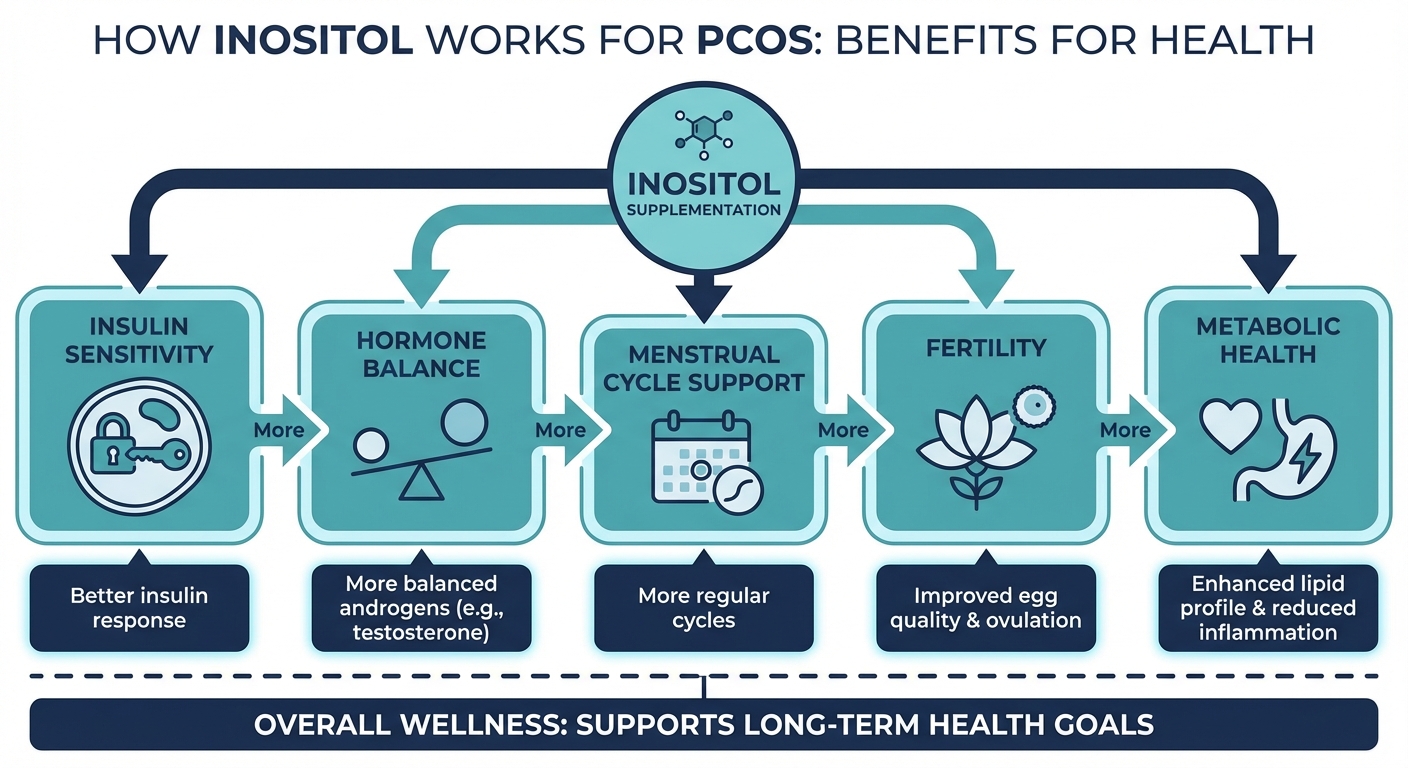
Inositol is a vitamin‑like compound that helps your cells respond to insulin, with multiple clinical trials and reviews, including a large meta‑analysis of women with PCOS, showing its impact on insulin signalling. In PCOS, that pathway often works poorly, making insulin levels climb and hormones unstable.
- Better insulin sensitivity: Myo‑inositol and D‑chiro‑inositol can lower fasting insulin and improve blood sugar control in many women with PCOS, as demonstrated in controlled trials summarised by reproductive endocrinology research.
- Hormone balance: Over time, inositol may raise sex hormone–binding globulin (SHBG) and reduce androgens, which can calm symptoms like acne and excess hair, a pattern also reported in recent endocrine journal data.
- Cycle and ovulation support: inositol occurs naturally in developing follicles, which is why it has been proposed as something that might support egg development — a hypothesis drawn from an association, not a proven effect of supplementing. A Cochrane review of 13 trials in 1,472 women concluded that, on very low-quality evidence, it is uncertain whether myo-inositol improves live birth or clinical pregnancy rates, and the 2023 International PCOS Guideline classes inositol as experimental therapy for fertility. There is no evidence that starting months before conceiving works better than starting later.
- Metabolic and heart health: Studies show modest drops in LDL (“bad”) cholesterol and triglycerides, and small weight changes when inositol is combined with lifestyle change.
- Inositol and metformin: a conversation for your doctor: in the small head-to-head trials pooled for the 2023 International Evidence-Based PCOS Guideline, myo-inositol and metformin produced similar results for insulin resistance and ovulation, but those trials were small and mostly low-certainty, so “no measured difference” is not the same as “equally effective”. The clearest finding is that myo-inositol likely causes fewer gastrointestinal side effects. The guideline still recommends metformin over inositol. Metformin is a prescription medicine, so only your GP or endocrinologist can start, change or stop it — please do not substitute a supplement for a prescribed medicine, which aligns with safety summaries like the Cleveland Clinic review of inositol.
- Generally well tolerated: Research suggests long‑term use is usually safe, but it should still be used under health professional guidance, and real‑world experiences in PCOS cohorts are described in trials such as a prospective clinical study of myo‑inositol in PCOS.
Inositol is not a magic fix. Think of it as one useful piece in a larger PCOS plan, not the whole plan.
For personalised advice, an AusClin dietitian service can help you decide if inositol is suitable alongside your medical care, and a dedicated PCOS dietitian can integrate it with your broader treatment plan.
Why Work With a Dietitian When Using Inositol for PCOS?

Most PCOS trials with inositol also include structured nutrition and exercise changes, and this combined approach underpins many of the outcomes reported in randomised controlled trials. When people try the supplement alone, results are often weaker.
- Build the right eating pattern: A PCOS dietitian can tailor a lower‑GI or anti‑inflammatory style plan that smooths blood sugar rises and supports ovulation.
- Support sustainable weight change: Some women find cycles become more regular alongside modest changes in weight, though the randomised trials of lifestyle change in PCOS have not measured menstrual regularity, and the 2023 International PCOS Guideline deliberately sets no weight-loss target. Sustainable change needs more than a supplement—it needs habits you can keep, which our structured PCOS nutrition programs focus on.
- Time inositol with food: How and when you take inositol relative to meals can influence symptoms like post‑meal sugar spikes.
- Monitor safety and progress: A dietitian can work with your GP to track cholesterol, HbA1c, liver markers and cycle patterns over time.
- Adjust for different PCOS types: Response to inositol varies, and the evidence points in different directions: an exploratory meta-analysis found the most consistent testosterone reduction in women with a BMI under 25, while a small uncontrolled study suggested a larger insulin response in women starting with higher fasting insulin. Neither is strong enough to predict how an individual will respond, and the guideline finds no evidence supporting one diet composition over another.
- Reduce overwhelm: PCOS brings a lot of noise—supplements, diets, social media claims. A qualified dietitian filters the evidence and builds a clear, step‑by‑step plan.
Our team provides evidence‑based telehealth dietitian consults across Australia, so you can access PCOS support wherever you live, including comprehensive PCOS nutrition counselling from home.
Key Takeaway
Inositol can genuinely support insulin, hormones and fertility in PCOS—but it works best inside a bigger picture. Partner it with an experienced PCOS dietitian, and you turn a simple supplement into part of a structured, long‑term plan that supports your cycles, health and quality of life, especially when guided by an Accredited Practising Dietitian for PCOS who understands the latest inositol research.
Based near Newcastle? Our rooms are in Mount Hutton, and we also see clients by telehealth. See our dietitian in Newcastle & Lake Macquarie page →