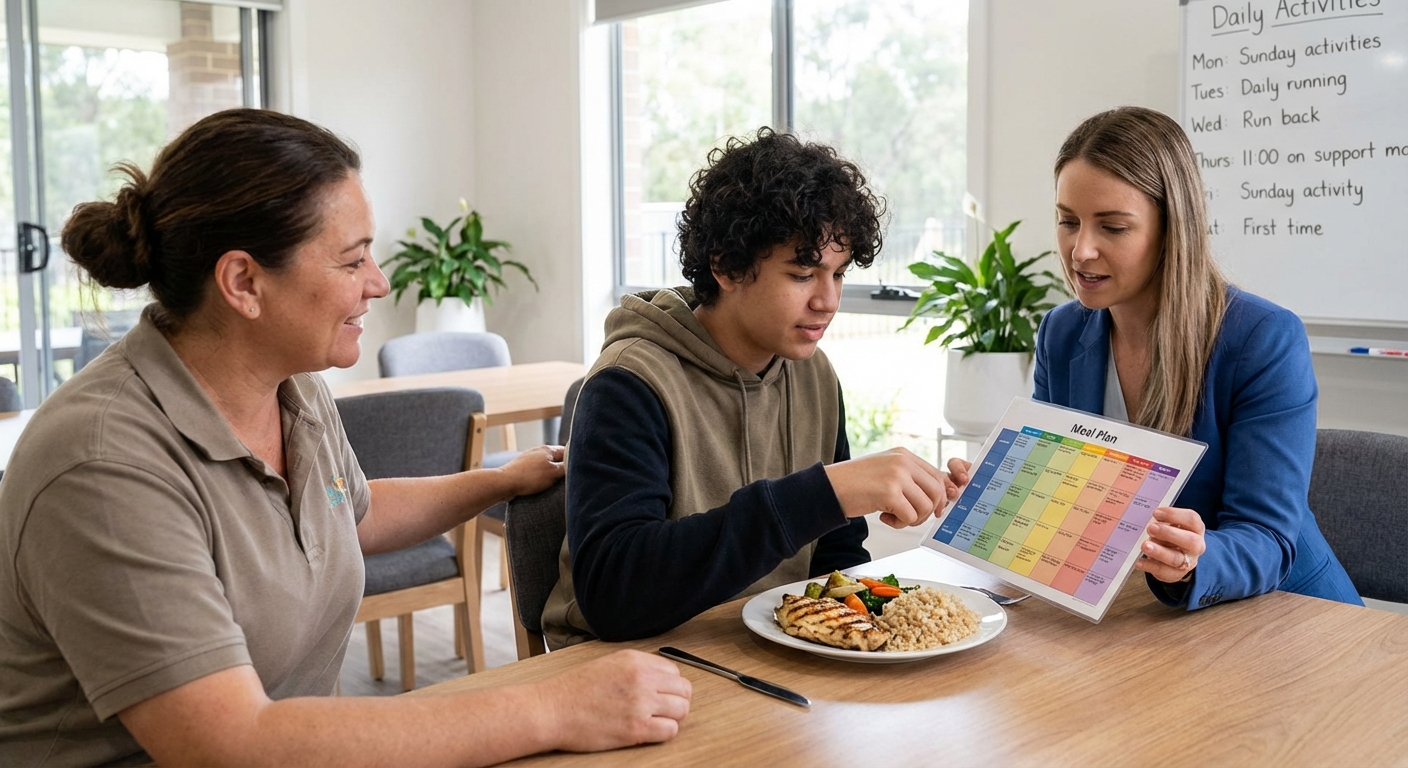
Young people living in Supported Independent Living (SIL) often face their hardest moments around food, not in clinic rooms, but at the dining table. Support workers are present for every snack and meal, yet many have limited access to eating‑disorder‑specific nutrition education. That gap can quietly increase clinical risk, undermine recovery progress and create inconsistent care between clinic and home. Specialist eating disorder dietitians are uniquely positioned to bridge this gap by translating complex treatment plans into practical, repeatable actions support workers can apply before, during and after meals.
Why SIL support is essential in recovery:
SIL services provide structure, routine and daily living support for people accessing the NDIS. These environments are central to long‑term recovery and wellbeing because they deliver:
-
Consistent routines that reduce anxiety
-
Opportunities for connection and community participation
-
Support with independence and decision making
-
Easier access to multidisciplinary healthcare and coordinated referrals
-
A recovery‑oriented, non‑judgemental environment
Support workers are not passive assistants, they are frontline clinicians in the home. Their actions at every meal directly affect physical safety, clinical progress and ongoing risk. Lack of eating‑disorder‑specific training is not minor: it is a measurable safety risk that can increase the likelihood of medical complications and relapse. With the right training, SIL workers can turn everyday mealtimes into safe, supportive, and therapeutic experiences.
The role of nutrition in SIL settings:
Nutrition underpins both physical safety and mental health. SIL workers are often the first to notice changes in:
-
Appetite and intake
-
Eating patterns and food‑related behaviours
-
Weight change or rapid fluctuations
-
Sensory‑based avoidance or increased secrecy around food
Everyday mealtimes influence physical health, mental health, behaviour, connection and recovery. Early observation and informed responses by SIL support workers can reduce risk and support timely referral to dietitians or multidisciplinary teams.
The nutrition training gap and why it matters:
Many SIL workers receive general mealtime or dysphagia training, vital for choking risk and texture modification but rarely receive education on body image distress, compensatory behaviours or refeeding dynamics. Without specialist-led training:
-
Staff responses become inconsistent across shifts and houses;
-
Treatment fidelity erodes between clinic and home;
-
Staff may rely on personal beliefs about food rather than evidence‑based approaches; and
-
Preventable nutrition‑related incidents and escalations increase.
The NDIS Practice Standards require providers to demonstrate workers are competent to deliver safe, high‑quality supports. While the Standards emphasise safe eating and texture modification, they do not detail how to manage the psychological and behavioural features of eating disorders in a home environment. This leaves providers to interpret what “competent” looks like in practice for this population. Importantly, the NDIS funding framework allows dietitians to be funded to train support workers as well as to write meal plans, an opportunity providers should use to solidify their duty of care.
Recognising eating disorders and disordered eating in SIL:
Early signs that should prompt escalation:
-
Skipping meals or rigid food rules
-
Binge eating or purging behaviours
-
Hiding, discarding or hoarding food
-
Sensory‑based food avoidance or extreme selectivity
-
Increased secrecy around eating
Other physical and behavioural indicators:
-
Low energy, dizziness or fainting
-
Rapid weight changes (loss or gain)
-
Mood changes, irritability or social withdrawal
Core competencies crucial in this setting can be categorised: before, during and after meals
Effective SIL meal support is a three‑phase process. Training should produce measurable competencies in each phase.
Pre‑meal
-
Create predictable, low‑trigger environments and visual schedules.
-
Implement and adhere to the dietitian’s meal structure (portions, timing, sequence).
-
Avoid ad‑hoc swaps or reduced portions that undermine exposure goals or refeeding protocols.
-
Make neurodivergent‑friendly adjustments (sensory supports, clear prompts)
-
Prepare staff to explain plan consistency to participants and families in neutral, non‑judgemental terms.
During the meal
-
Recognise avoidance tactics, negotiation, subtle compensatory behaviours and escalation cues.
-
Maintain a calm, neutral, non‑judgemental but firmly boundaried approach.
-
Use scripted prompts and behaviour‑level guidance aligned to the clinical plan (support workers provide structure, not therapy).
-
Manage distress with evidence‑based, non‑therapeutic supports while clinical team members deliver formal therapy.
Post‑meal
-
Supervise unobtrusively during the higher‑risk post‑meal window for compensatory behaviours.
-
Use planned distractions and coping strategies agreed with the clinical team.
-
Document observations clearly, precisely and usefully for clinicians (what, when, context).
-
Escalate promptly if signs of medical instability or acute distress appear.
Best‑practice mealtime support
Simple, consistent approaches make a significant difference:
-
Predictable routines and visual cues for participants
-
Neutral, supportive language; no diet talk or moralising food or bodies
-
Encouraging autonomy where clinically appropriate and safe
-
Individualised meal support plans co‑produced with dietitians and clinicians
-
Small practical adjustments for neurodivergent participants (sensory adaptation, quiet spaces) designed to preserve therapeutic exposure
The strategic role of expert eating disorder dietitians:
Eating disorder dietitians bring a dual lens: metabolic and behavioural. They understand refeeding risks, medication‑related appetite changes and the day‑to‑day realities of eating in recovery. Dietitians translate multidisciplinary treatment plans into plain‑language protocols that fit rosters, staff skill levels and home routines. Training modules can and should cover:
-
Early identification of red flags
-
Boundaries of the support worker role (what staff do vs clinicians)
-
Practical documentation templates that inform clinical reviews
-
How to hold treatment lines while maintaining person‑centred care
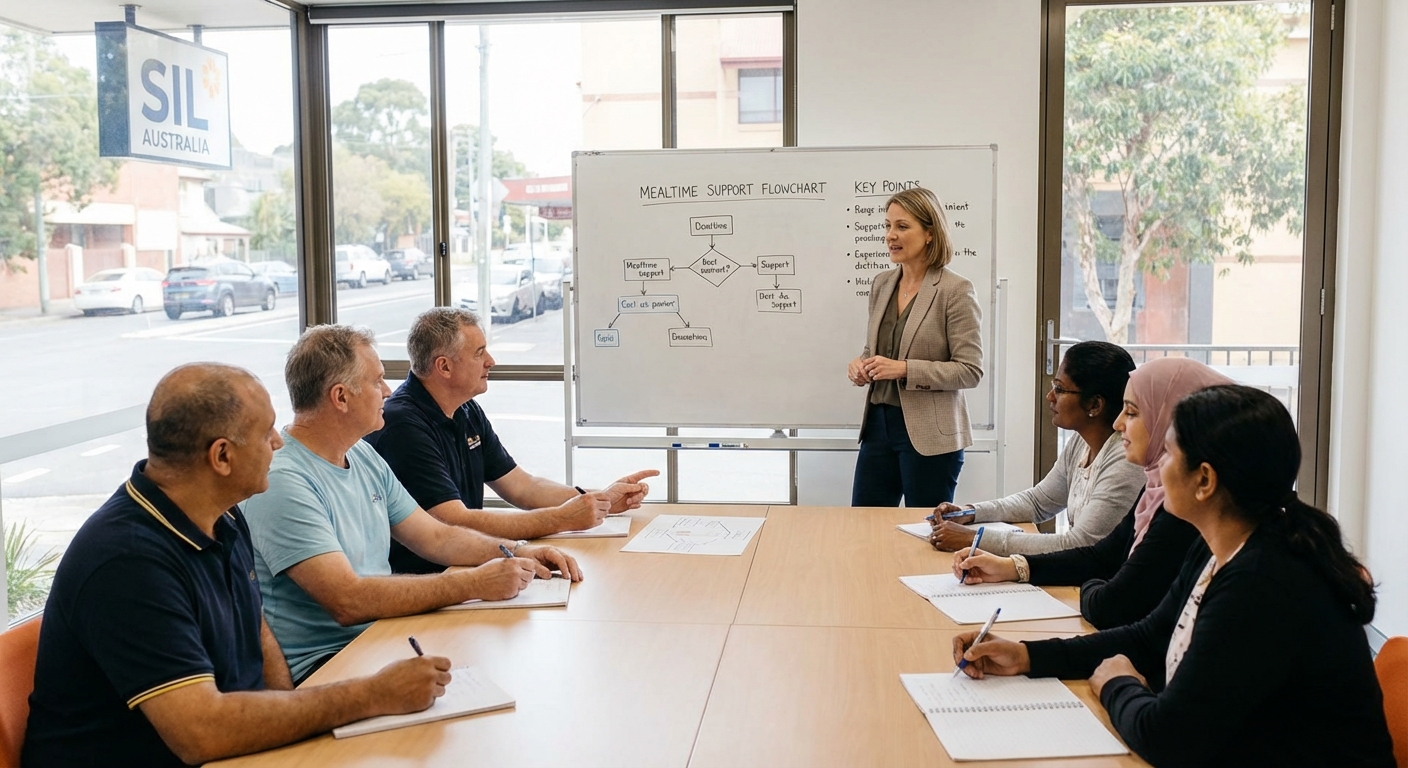
Training designed to national workforce competencies (ANZAED, NEDC) ensures staff learn not only “what to do” but “why it matters.” Using qualified dietitians for staff education demonstrates compliance with duty of care, reduces variability between homes and supports safer induction of new staff.
Multidisciplinary integration and governance:
SIL workers should be integrated into clear multidisciplinary pathways:
-
Dietitians for assessment, meal planning and staff training
-
Psychologists and counsellors for therapeutic interventions
-
Nurses, GPs and pharmacists for medical and medication review
Clear governance is essential:
-
Align training and competency frameworks with ANZAED practice and training standards, NEDC guidance and NDIS Practice Standards.
-
Establish documented escalation pathways, named clinical leads and communication protocols.
-
Require competency checks and include mealtime fidelity in clinical reviews.
Preventing burnout and supporting your workforce:
Supporting people with complex mental health needs is demanding. Training must include:
-
Clear role boundaries and expectations
-
Debriefing and reflective practice procedures
-
Burnout prevention and self‑care strategies for staff
-
Practical supervision and escalation pathways so staff can debrief difficult shifts safely
Clinically trained staff with access to supervision are less likely to burn out and more likely to remain in role, improving service consistency.
Implementation steps for providers (actionable):
-
Conduct a gap analysis mapping current meal support practice to the competencies above.
-
Commission specialist dietitian‑led induction modules for all staff in houses supporting eating disorders.
-
Schedule targeted refreshers following incidents or clinical plan changes.
-
Implement supervision and debrief pathways linked to clinical governance.
-
Measure impact using NDIS quality indicators and local data: competency scores, incident frequency, escalation timing, staff retention and participant outcomes.
-
Document all training, competency checks and ongoing supervision to demonstrate compliance and continuous improvement.
Outcomes you can expect:
When training is clinician‑led and competency‑based, providers typically see:
-
Increased staff confidence and measurable competency improvements
-
Greater fidelity to dietary and exposure plans across homes
-
Fewer nutrition‑related incidents and more timely escalations
-
Better clinical‑to‑home alignment and improved participant outcomes
-
Improved staff retention through supported skill development and wellbeing supports
Practical resources and program options:
Ausclin offers specialised nutrition and eating disorder training tailored for SIL teams. Key areas have been highlighted above and also include:
-
Eating disorder recognition and disordered eating support
-
Pre/during/post‑meal strategies and documentation templates
-
Nutrition and mental health, including medication‑related appetite changes
-
Neurodivergent‑friendly mealtime approaches (sensory supports, visual schedules)
-
Support worker wellbeing, role boundaries and supervision pathways
Training is evidence‑informed, practical and tailored to real‑world SIL environments. Delivery is flexible (onsite or online) and can be scoped to your service model, participant needs and funding arrangements.
High‑quality meal support in SIL is not about turning support workers into therapists. It is about equipping them with focused, practical skills delivered by expert eating disorder dietitians so every meal becomes a safer, consistent step towards recovery. When clinical plans and daily support align, young people are less likely to feel pulled in different directions and more likely to experience SIL as a genuinely therapeutic environment.
If your service supports young people with eating disorders and you want tailored, clinician‑led training, Ausclin’s specialist nutrition programs can help build staff capability and meet NDIS Practice Standards. Contact Ausclin to discuss scoping, tailored training packages, including multidisciplinary team options, competency assessments and flexible delivery across Australia.
Frequently Asked Questions
Why is eating disorder specific nutrition training important for SIL support workers?
Support workers in Supported Independent Living (SIL) see every meal and snack, so their actions directly affect medical safety and recovery. Without eating‑disorder‑specific training, staff may unintentionally reinforce disordered behaviours, give inconsistent messages, or miss early warning signs of deterioration. Specialist training from eating disorder dietitians helps workers respond safely, consistently and in line with the young person’s treatment plan.
What is the role of a dietitian in supporting young people with eating disorders in SIL?
Eating disorder dietitians translate complex meal plans and clinical guidelines into clear, practical strategies that SIL staff can use before, during and after meals. They provide education on safe nutrition goals, mealtime structure, refeeding risks, and how to respond to distress or compensatory behaviours. Dietitians also help align home support with the broader multidisciplinary team so care is consistent across settings.
How can SIL providers get eating disorder nutrition education for their staff?
SIL providers can partner with specialist eating disorder dietitians, such as those at AusClin, to deliver tailored training for their teams. Training can be offered through on‑site workshops, online sessions, case consultations and written resources aligned to specific house needs. Many providers integrate this training into onboarding and annual professional development to maintain competency and safety.
What are the risks if SIL staff don’t have eating disorder training?
Without targeted training, staff may respond to food refusal, weight changes or compensatory behaviours in ways that increase anxiety or medical risk. This can lead to inconsistent care, poorer treatment adherence, preventable hospital presentations and higher relapse risk. It also places pressure on workers, who may feel unsure or unsafe managing complex eating disorder presentations.
How does nutrition education for support workers improve eating disorder recovery outcomes?
Nutrition education helps support workers turn everyday meals into structured, predictable and therapeutic experiences that match the young person’s treatment plan. Staff learn how to notice early changes in intake, behaviour and weight, and how to respond calmly and consistently. This improves treatment fidelity between clinic and home, supports weight and medical stability, and reduces escalation and crisis episodes.
What should SIL workers look out for as early warning signs of eating disorder relapse?
Common early signs include reduced portion sizes, skipped snacks, increasing rules around food, eating in isolation, or sudden changes in meal timing. Workers may also notice rapid weight changes, more time spent in the bathroom after meals, or growing distress and negotiations around food. With training from dietitians, staff can recognise these patterns sooner and escalate concerns appropriately.
How is AusClin’s eating disorder training different from general mealtime or dysphagia training?
General mealtime or dysphagia training focuses on safe swallowing, textures and basic support, but usually doesn’t cover body image distress, compensatory behaviours or refeeding risk. AusClin’s eating disorder dietitians provide condition‑specific education grounded in current evidence and clinical guidelines. Training is tailored to NDIS and SIL contexts, with practical scripts, examples and meal‑time strategies workers can apply immediately.
Can eating disorder dietitians work with our existing NDIS and multidisciplinary team?
Yes, eating disorder dietitians routinely collaborate with psychologists, OTs, speech pathologists, coordinators and medical teams within the NDIS framework. They help ensure nutrition plans, behavioural strategies and support worker actions are aligned, reducing mixed messages for the young person. AusClin can join case meetings, contribute to behaviour support plans and provide documentation that fits NDIS goals and reporting requirements.
How often should SIL staff receive refreshers on eating disorder nutrition training?
Most services benefit from a comprehensive initial training followed by annual refreshers or sooner if there are complex cases, staff turnover or changes in clinical risk. Short update sessions or case‑based consultations can keep skills current and address new behaviours as they emerge. AusClin can work with SIL providers to set a training schedule that matches risk level, staff experience and resident needs.
Is eating disorder nutrition training covered under NDIS funding for SIL providers?
In many cases, education and training for support workers can be funded under NDIS capacity‑building or provider training related to participant needs, but it depends on each plan and support category. SIL providers typically work with support coordinators or plan managers to confirm how dietitian‑led training can be claimed. AusClin can provide clear documentation of training content and its link to participant goals to support funding discussions.