Pregnancy Nutrition Dietitian: Expert Support for a Healthy Pregnancy
Introduction: Why a Pregnancy Nutrition Dietitian Matters

Nutrition in pregnancy can feel overwhelming. One minute you are told to “eat for two”, the next you are warned about weight gain, listeria, mercury and a dozen different supplements. A dedicated pregnancy nutrition dietitian helps cut through this noise with clear, personalised guidance grounded in evidence, not opinion, and aligned with healthy pregnancy nutrition guidelines.
Accredited Practising Dietitians (APDs) support healthy pregnancies in Australia, from everyday food choices through to complex medical conditions. Dietetic care becomes essential when you are managing high-risk pregnancies, navigating key micronutrients and weight gain targets, or dealing with persistent symptoms that derail eating. All information here is general in nature and does not replace medical advice from your GP, obstetrician or APD.
The Role of a Pregnancy Nutrition Dietitian in Australia
In standard antenatal care, most people receive brief, generic nutrition messages: “eat plenty of vegetables”, “cut back on soft drinks”, “avoid soft cheeses”. Helpful, yes, but not enough when your body is growing a baby and your medical history, culture, budget and symptoms all shape what you can actually eat day to day, especially when nuanced topics like pregnancy diet and food safety are involved.
An Accredited Practising Dietitian provides full medical nutrition therapy in pregnancy. They calculate your energy and nutrient needs, factor in medical conditions or medications, and map these requirements onto real food that fits your lifestyle. Instead of a one-size-fits-all plan, you receive tailored meal ideas, snack strategies and shopping lists that work with your specific circumstances, including cultural foods and budget.
At AusClin, our pregnancy dietitians integrate nutrition care with your wider healthcare team, aligning advice with Australian Dietary Guidelines and your medical plan so that you receive coordinated support rather than conflicting messages.
High-Risk Pregnancy Nutrition: When Dietitians Are Essential
For many women, pregnancy is medically straightforward. For others, conditions such as gestational diabetes mellitus (GDM), pre-existing type 1 or type 2 diabetes, chronic hypertension, preeclampsia, hyperemesis gravidarum, kidney disease, obesity, or a history of bariatric surgery make nutrition far more complex. In these situations, a pregnancy nutrition dietitian is not a “nice to have” they are a critical part of the clinical team.
After bariatric surgery, nutrition becomes even more delicate. Dietitians monitor micronutrient status, help prevent protein and micronutrient deficiencies and malnutrition, and guide safe supplement use within the limits set by your surgical team. Without expert support, there is a real possibility of deficiencies in iron, vitamin B12, folate or fat-soluble vitamins, which may harm both parent and baby.
AusClin’s pregnancy nutrition services are structured around this higher level of clinical complexity, ensuring that anyone with a high-risk pregnancy can access specialist support rather than relying on generic online advice.
Key Pregnancy Micronutrients, Weight Gain and Common Symptoms
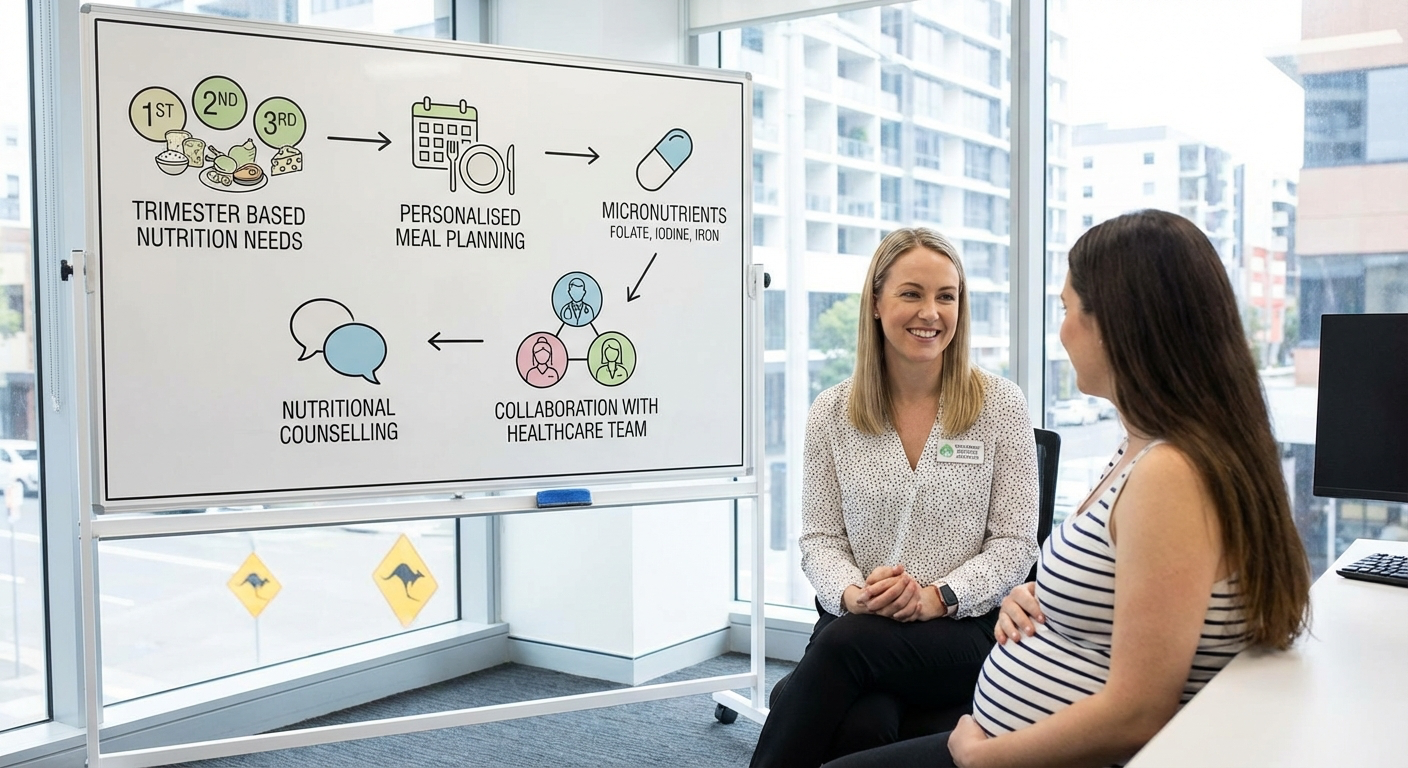
One of the most common questions in pregnancy is, “What vitamins do I actually need, and how much food is enough?” The answer is not the same for everyone, but there are consistent nutrient priorities that a pregnancy nutrition dietitian will consider, echoing established pregnancy nutrition recommendations.
During pregnancy, your body needs more folate, iron, iodine, calcium, vitamin D and protein than usual. Australian Nutrient Reference Values provide public recommended intakes that dietitians use as anchors when planning diets. Folate and iron requirements rise to support neural tube formation and increased blood volume, while calcium and vitamin D support bone development and maternal bone health (NHMRC, 2017, https://www.nrv.gov.au/). A dietitian will first look at what can be achieved with food, then identify if a prenatal or individual nutrient supplement may be appropriate in discussion with your doctor, in line with broader nutrition recommendations for pregnancy and lactation.
Food-based strategies might include fortified breakfast cereals and leafy greens for folate, lean red meat and legumes for iron, dairy foods or calcium-fortified plant milks for calcium, and safe, low-mercury fish or DHA-fortified products for omega-3 fats. They will also flag safety issues, such as avoiding excess vitamin A in retinol form due to the risk of birth defects, and watching for constipation or nausea from unnecessary high-dose iron supplements. Therapeutic doses of supplements should only ever be used under medical supervision; this kind of fine detail is exactly what dietitians are trained to navigate.
In real life, even the best nutrition plan will run into roadblocks: nausea, vomiting, food aversions, reflux, constipation, crushing fatigue. This is where a pregnancy nutrition dietitian moves from theory to lived reality, helping you protect your nutrient intake even when your appetite disappears.
For morning sickness and food aversions, dietitians often recommend small, frequent meals built from nutrient-dense, easy-to-tolerate options. That might include smoothies with yoghurt, fruit, nut butter and a hint of ginger, cold foods if hot food smells trigger nausea, or simple combinations like crackers with cheese and tomato. The goal is not a perfect plate; it is survival and keeping some energy, protein and key micronutrients coming in while symptoms (hopefully) settle.
They also help prioritise: if you can only handle a few foods, which ones give the most nutritional “bang for buck”? A dietitian might recommend fortified cereal plus milk in the morning for folate and iron, then a simple egg-and-vegetable toastie later in the day for extra protein and choline, rather than relying solely on plain toast or dry biscuits. These small, strategic swaps can prevent longer-term deficits when first-trimester symptoms are severe.
Beyond nausea, dietitians address constipation, reflux through a combination of fibre and fluid strategies, meal timing and food choices. They may adjust your fibre sources gradually, recommend specific whole grains and seeds, and help you distribute meals to reduce reflux at night.
Practical Tips for Working With a Pregnancy Nutrition Dietitian
Between sessions, it helps to start with 1–2 key changes rather than trying to overhaul everything at once, keep notes on what works and what does not, and bring questions to your next appointment, especially around new test results or medication changes. In Australia, many pregnancy nutrition consultations are available via GP referral and may be eligible for Medicare rebates, private health rebates or both, depending on your situation. A clinic like AusClin can advise what funding options apply and whether a chronic disease management plan is appropriate for you.
Conclusion and Next Steps
Nutrition in pregnancy is too important and too individually variable to leave to guesswork or generic online checklists. A pregnancy nutrition dietitian combines advanced training, clinical experience and practical problem-solving to help you navigate micronutrient needs, weight gain, morning sickness and complex conditions with confidence.
If you are pregnant or planning pregnancy and want tailored, evidence-based nutrition care, consider booking with an AusClin dietitian. Our team provides in-clinic in the Lake Macquarie area and online consultations across Australia, working alongside your GP and specialist team. Reach out today to discuss your goals and learn how personalised dietetic support can help you and your baby thrive.
References and Search Strategy
Search strategy: PubMed and Google Scholar were searched on 20 January 2026 using terms including “pregnancy nutrition dietitian”, “gestational diabetes dietary intervention”, “hypertensive disorders pregnancy diet”, “gestational weight gain guidelines”, and “dietitian-led antenatal care outcomes”. Priority was given to systematic reviews, meta-analyses, clinical guidelines and Australian government or professional resources.
-
Fernandez, L., et al. (2017). Medical nutrition therapy in gestational diabetes mellitus: A review of current evidence. Diabetes & Metabolism, 43(5), 389–397. https://doi.org/10.1016/j.diabet.2017.01.006
-
Institute of Medicine and National Research Council. (2009). Weight Gain During Pregnancy: Reexamining the Guidelines. National Academies Press. https://nap.nationalacademies.org/catalog/12584/
-
National Health and Medical Research Council. (2017). Nutrient Reference Values for Australia and New Zealand. https://www.nrv.gov.au/
-
Rogozinska, E., et al. (2017). Effect of diet and physical activity based interventions in pregnancy on gestational weight gain and pregnancy outcomes: Meta-analysis of individual participant data from randomised trials. Cochrane Database of Systematic Reviews, (6), CD010942. https://doi.org/10.1002/14651858.CD010942.pub2
-
Thangaratinam, S., et al. (2012). Effects of interventions in pregnancy on maternal weight and obstetric outcomes: Meta-analysis of randomised evidence. BMJ, 344, e2088. https://doi.org/10.1136/bmj.e2088
-
Dietitians Australia. (n.d.). What is an Accredited Practising Dietitian (APD)? Retrieved January 2026 from https://www.dietitiansaustralia.org.au/
All information in this article is for general educational purposes only and is not a substitute for personalised medical or nutrition advice. Always consult your GP, obstetrician or Accredited Practising Dietitian for individual recommendations.
Frequently Asked Questions
What does a pregnancy nutrition dietitian actually do?
A pregnancy nutrition dietitian (usually an Accredited Practising Dietitian in Australia) assesses your medical history, blood tests, weight trends, symptoms and usual eating pattern, then builds a personalised plan for each trimester. They help you meet key nutrient needs, manage pregnancy symptoms with food, support healthy weight gain, and give clear advice on food safety and supplements based on current evidence.
Do I really need to see a dietitian during pregnancy or is following general guidelines enough?
General pregnancy nutrition guidelines are a good starting point, but they can’t account for your individual medical history, culture, budget, appetite changes or pregnancy complications. Seeing a dietitian is especially helpful if you have nausea or food aversions, are unsure about safe weight gain, follow a vegetarian or vegan diet, or have conditions like gestational diabetes, thyroid issues or a history of disordered eating.
How can a dietitian help with pregnancy weight gain and BMI?
An Accredited Practising Dietitian will calculate an appropriate weight gain range based on your pre‑pregnancy BMI, number of babies (single vs twins) and health conditions. They then design an eating plan that supports your baby’s growth without excessive or inadequate weight gain, focusing on nutrient-dense foods, realistic portions and strategies for managing hunger, cravings and emotional eating.
What nutrients are most important in pregnancy and can a dietitian help me meet them with food?
Key nutrients in pregnancy include folate, iron, iodine, omega‑3s, calcium, vitamin D, choline and adequate protein and energy. A pregnancy dietitian can translate these targets into practical meals and snacks using foods you enjoy, and identify when food alone is unlikely to be enough so you can discuss appropriate supplements with your GP or obstetrician.
How does a dietitian support women with gestational diabetes or high‑risk pregnancies?
For gestational diabetes and high‑risk pregnancies, a dietitian provides medical nutrition therapy tailored to your blood glucose targets, medications, blood pressure and other complications. They help you balance carbohydrates, proteins and fats across the day, time your meals and snacks, choose low‑GI options, and adjust your plan as your pregnancy and blood results change.
Can a pregnancy nutrition dietitian help with severe morning sickness or food aversions?
Yes, dietitians routinely help manage nausea, vomiting and food aversions in pregnancy. They can suggest gentle, lower‑smell foods, timing and texture strategies, hydration options and evidence-based supplements where appropriate, while monitoring your nutrient intake and weight to reduce the risk of deficiencies or complications like dehydration.
What foods should I avoid during pregnancy and will a dietitian give me a safe food list?
A dietitian can provide a clear, personalised list of foods to avoid or handle carefully to reduce risks from listeria, salmonella and high‑mercury fish, based on Australian food safety guidelines. They also help you find safe alternatives for common foods like soft cheeses, deli meats, pre‑prepared salads and certain fish so your diet stays enjoyable and varied.
How is advice from an Accredited Practising Dietitian different from what I see online or on social media?
Accredited Practising Dietitians in Australia are university‑trained, regulated health professionals who must base their advice on current scientific evidence and national guidelines. They review your medical history and blood tests, work alongside your GP or obstetrician, and avoid restrictive or fad diets that can compromise your nutrient intake or your baby’s growth.
When is the best time in pregnancy to book in with a dietitian?
Ideally, you see a dietitian when planning a pregnancy or early in the first trimester, so you can optimise folate, iodine and other nutrients from the start. However, it is never too late—dietitians can support you at any stage of pregnancy, including if issues only arise in the second or third trimester, or if you’ve already been diagnosed with a pregnancy‑related condition.
Does AusClin offer online pregnancy nutrition appointments in Australia?
AusClin provides pregnancy nutrition support from Accredited Practising Dietitians, and many services can be delivered via secure telehealth for people across Australia. This allows you to access evidence-based, personalised pregnancy nutrition care from home, with options to coordinate advice with your GP, midwife or obstetrician.