Women’s Health · Free Tool
Are you getting enough iron?
A free, private iron check from our Accredited Practising Dietitians in Newcastle & Lake Macquarie. Add today’s foods to see how your iron intake compares with your target, plus the absorption tips that actually make it count.
Iron is the nutrient Australians, especially menstruating women, pregnant women, teens and people eating little or no meat, most commonly run low on. Low iron shows up as fatigue, breathlessness, poor concentration and low mood, and it’s easy to miss. This free tool, built by our Accredited Practising Dietitians, gives you a quick, private snapshot of your day’s iron against your life-stage target, and, just as importantly, shows you how to absorb more of it.
How to use this calculator
- Choose your life stage, this sets your daily iron target.
- Enter how many servings of each food you’ve had today (halves and quarters are fine).
- Watch your running total and percentage of target update instantly, each food is tagged meat/fish or plant.
- Use the absorption tips and the meal ideas below to close any gap. Print your summary to bring to your appointment.
Check your iron intake
Total iron: 0 mg (0% of your 18 mg/day target)
Low on iron? Iron needs, and how well you absorb it, are very individual. An Accredited Practising Dietitian can help you get there safely. See the booking options below.
Not there yet? Find recipes to boost your iron →
This adds up the iron in your food against your target. Iron from meat, chicken and fish (“heme” iron) is absorbed far better than iron from plants (“non-heme”). To get more from plant foods, pair them with vitamin C (citrus, capsicum, tomato, kiwi) and keep tea and coffee away from meals. People who don't eat meat often need more than the numbers above, a dietitian can help you get there.
Book an iron & nutrition consult
Prefer to book straight away? Book online with Ausclin → Based in Mount Hutton: dietitian in Newcastle & Lake Macquarie.
Clinical-grade. Private by design.
Built by Accredited Practising Dietitians, and every calculation runs privately in your browser.
Why iron matters, and who runs low
Iron carries oxygen around your body. When it runs low, everything feels harder: energy dips, workouts suffer, and pregnancy places especially high demands as your blood volume expands and your baby builds their own stores. The groups most likely to fall short are menstruating women (monthly losses), pregnant women (needs jump to 27 mg/day), teenagers, endurance athletes, and anyone eating little or no red meat. If you’re constantly tired, it’s worth checking, both your intake here, and your iron stores (ferritin) with your GP.
Heme vs non-heme: it’s not just how much, but how much you absorb
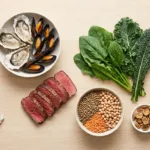
Not all dietary iron is equal. Heme iron, from meat, chicken and fish, is absorbed two to three times more efficiently than non-heme iron from plants (legumes, tofu, wholegrains, leafy greens). That’s why this calculator tags each food, and why a plant-based eater may need considerably more total iron than the target suggests. The good news: you can boost non-heme absorption a lot with a few simple habits:
- Add vitamin C to plant-iron meals, a squeeze of lemon, capsicum, tomato, or a piece of fruit after.
- Keep tea and coffee away from meals, the tannins block absorption. Enjoy them between meals instead.
- Pair plant and animal sources, a little meat helps you absorb the iron from the plants alongside it.