
Add as a preferred source on Google
Magnesium is one of the most popular supplements in Australia, sold for sleep, cramps, stress and periods. Your body needs it for hundreds of processes, from muscle and nerve function to blood glucose control, and about three in ten Australians do not get enough from food. This guide sets out how much magnesium you need, the best food sources, what research says about supplements, and when to be careful.
At a glance
- Australian adults need 310 to 320 mg a day (women) and 400 to 420 mg (men).
- 31% of Australians aged 2 and over had an inadequate magnesium intake from food in 2023 (ABS).
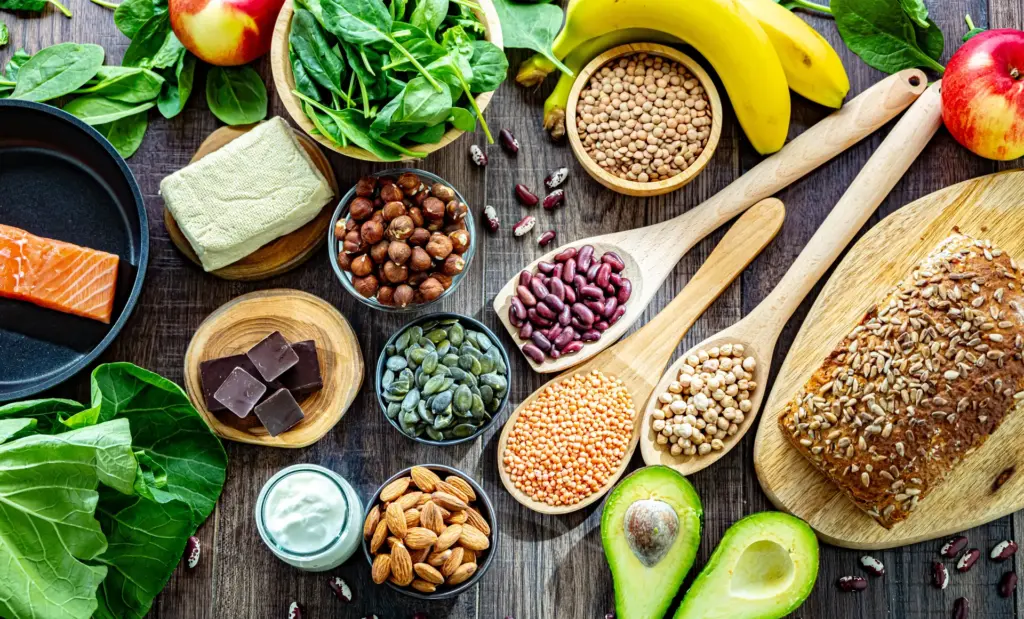
- Pumpkin seeds, nuts, oats, tofu, wholegrains, legumes and leafy greens are good sources.
- Supplement evidence is mixed: probably helpful for migraine prevention, weak for sleep, unlikely to help cramps in older adults.
- The upper limit from supplements is 350 mg a day for adults. More can cause diarrhoea.
How much magnesium do you need?
| Group | Recommended dietary intake (mg a day) |
|---|---|
| Women 19 to 30 | 310 |
| Women 31 and over | 320 |
| Men 19 to 30 | 400 |
| Men 31 and over | 420 |
Source: NHMRC Nutrient Reference Values. Needs are higher in pregnancy and breastfeeding; see the NRVs or ask your midwife or doctor. The Upper Level of 350 mg a day for adults applies only to magnesium from supplements and medicines, not food. The NHMRC notes magnesium naturally present in food has not been shown to cause toxic effects; diarrhoea is the first sign of too much from supplements.
The Australian Bureau of Statistics found 31.3% of Australians aged 2 and over had an inadequate magnesium intake from food in 2023, more often males (35.2%) than females (27.3%), and adults (35.9%) than children.
Food sources
Values from the Australian Food Composition Database (FSANZ, Release 3), per 100 g. Seeds and nuts are rich but eaten in smaller amounts.
| Food (per 100 g) | Magnesium (mg) |
|---|---|
| Pumpkin seeds, hulled and dried | 530 |
| Almonds, with skin | 268 |
| Cashews, raw | 250 |
| Dark chocolate, high cocoa | 120 |
| Rolled oats, uncooked | 104 |
| Tofu, firm | 99 |
| Spinach, boiled | 76 |
| Brown rice, boiled | 72 |
| Wholemeal bread | 63 |
| Banana | 30 |
| Red kidney beans, canned, drained | 30 |
| Chickpeas, canned, drained | 27 |
What the research says about supplements
- Sleep. A meta-analysis of three small trials in older adults found people fell asleep about 17 minutes faster, with no significant change in total sleep time, and the evidence was low to very low quality.
- Muscle cramps. A Cochrane review concluded magnesium is unlikely to provide meaningful cramp prevention for older adults with ordinary muscle cramps.
- Migraine. A US neurology guideline rated magnesium as probably effective for migraine prevention.
- PMS. A systematic review found some preliminary benefit for one form of magnesium and none for magnesium oxide, with only calcium supported by good quality evidence.
- Menopause hot flushes. A trial in 289 women found magnesium did not reduce hot flushes. See our guide to perimenopause supplements.
On forms, the US National Institutes of Health notes citrate, aspartate, lactate and chloride forms tend to be absorbed better than magnesium oxide. Evidence on individual forms such as glycinate is limited.
Be careful if: you have kidney disease (the risk of magnesium build-up increases), or take bisphosphonates for bone or tetracycline or quinolone antibiotics, which magnesium can bind to; these need to be taken hours apart (NIH Office of Dietary Supplements). High-dose supplements can cause diarrhoea, nausea and cramping. Check with your doctor or pharmacist before starting.
Food first, then decide
Whether you need a magnesium supplement depends on what you eat, your symptoms, your kidney function and your medicines. Felicity can check your intake, suggest easy food swaps and help you decide whether a supplement is worth discussing with your GP.
Felicity Bull is an Accredited Practising Dietitian. She sees clients in person in Mount Hutton (Newcastle and Lake Macquarie) and by telehealth across Australia.
Book with Felicity →Common questions
How much magnesium do I need a day?
The Australian recommended dietary intake is 310 to 320 mg a day for women and 400 to 420 mg for men, depending on age.
What foods are high in magnesium?
Pumpkin seeds, almonds, cashews, dark chocolate, oats, tofu, spinach, brown rice, wholemeal bread and legumes.
Does magnesium help you sleep?
The evidence is weak. A review of three small trials in older adults found people fell asleep about 17 minutes faster, but the quality of evidence was low.
What is the maximum magnesium I can take?
The Australian upper level from supplements and medicines is 350 mg a day for adults. Magnesium from food does not count towards it.
Is magnesium glycinate better?
Some forms, such as citrate, are absorbed better than magnesium oxide. Research on glycinate specifically is limited.
Where this comes from
General information only, not personal advice. It does not replace advice from your doctor or dietitian.
- National Health and Medical Research Council, Nutrient Reference Values for Australia and New Zealand. Magnesium. www.eatforhealth.gov.au/nutrient-reference-values/nutrients/magnesium
- Australian Bureau of Statistics. Usual nutrient intakes, 2023 (released March 2026). www.abs.gov.au/statistics/health/food-and-nutrition/usual-nutrient-intakes/2023
- Food Standards Australia New Zealand. Australian Food Composition Database, Release 3 (December 2025): nutrient profiles, caffeine (analysed values per 100 g or 100 mL). www.foodstandards.gov.au/science-data/food-nutrient-databases/afcd/data-files
- Mah J, Pitre T. Oral magnesium supplementation for insomnia in older adults: a systematic review and meta-analysis. BMC Complementary Medicine and Therapies. 2021;21:125. pmc.ncbi.nlm.nih.gov/articles/PMC8053283/
- Garrison SR, Korownyk CS, Kolber MR, et al. Magnesium for skeletal muscle cramps. Cochrane Database of Systematic Reviews. 2020;9:CD009402. pmc.ncbi.nlm.nih.gov/articles/PMC8094171/
- Holland S, Silberstein SD, Freitag F, et al. Evidence-based guideline update: NSAIDs and other complementary treatments for episodic migraine prevention in adults. Neurology. 2012;78(17):1346-1353. pmc.ncbi.nlm.nih.gov/articles/PMC3335449/
- Whelan AM, Jurgens TM, Naylor H. Herbs, vitamins and minerals in the treatment of premenstrual syndrome: a systematic review. Canadian Journal of Clinical Pharmacology. 2009;16(3):e407-429. pubmed.ncbi.nlm.nih.gov/19923637/
- Park H, Qin R, Smith TJ, Atherton PJ, et al. North Central Cancer Treatment Group N10C2 (Alliance): a double-blind placebo-controlled study of magnesium supplements to reduce menopausal hot flashes. Menopause. 2015;22(6):627-632. pubmed.ncbi.nlm.nih.gov/25423327/
- NIH Office of Dietary Supplements. Magnesium: fact sheet for health professionals (updated January 2026). ods.od.nih.gov/factsheets/Magnesium-HealthProfessional/
- Walker AF, Marakis G, Christie S, Byng M. Mg citrate found more bioavailable than other Mg preparations in a randomised, double-blind study. Magnesium Research. 2003;16(3):183-191. pubmed.ncbi.nlm.nih.gov/14596323/
- healthdirect Australia. Magnesium (reviewed April 2025). www.healthdirect.gov.au/magnesium