
Add as a preferred source on Google
When your appetite is low, meals can feel like a chore, and protein is often the first thing to slip. That happens for many reasons: getting older, illness or recovery, low mood, or medicines such as GLP-1 medication that reduce hunger. If you have been prescribed GLP-1 medication, or your appetite has dropped for another reason, small protein-rich snacks can help you keep up. This guide explains why protein matters when you are eating less, which snacks pack the most protein into a small amount, and shares a five-minute cottage cheese bowl.
At a glance
- Eating less often means eating less protein, which can lead to muscle loss, especially in older adults.
- European guidelines for older people recommend at least 1 g of protein per kilogram of body weight a day, and offering extra snacks when intake is low.
- In trials of GLP-1 medication, lean mass made up anywhere from about 15% to more than 40% of the weight lost, depending on the study.
- Cottage cheese, eggs, canned tuna, cheese, milk and yoghurt are compact sources of protein.
- If you are losing weight without trying, or eating very little, see your doctor and dietitian.
Why protein matters when you eat less
Protein helps you keep muscle, and muscle matters for strength, balance and recovery. When appetite falls, total food and protein usually fall with it. The ESPEN guideline on nutrition in older people recommends at least 1 g of protein per kilogram of body weight a day, adjusted for the person, and says people who are malnourished or at risk should be offered additional snacks or finger food and fortified foods. Healthdirect’s advice for people at risk of malnutrition is similar: small meals and snacks through the day, and milky drinks.
For people taking GLP-1 medication, Dietitians Australia and Exercise and Sports Science Australia note that these medicines reduce appetite and food intake, which makes it harder to get enough protein, vitamins and minerals, with risks including lean tissue loss and frailty. A joint advisory from four US nutrition and obesity organisations lists adequate protein intake and strength training to preserve lean mass as one of its priorities. Studies vary on how much of the weight lost is lean mass, from about 15% to more than 40%, and lean mass includes organs, bone and fluid as well as muscle.
Protein-dense snack ideas
The trick is choosing foods that give a lot of protein in a small volume. Values from the Australian Food Composition Database (FSANZ, Release 3), per 100 g unless stated.
| Food | Protein per 100 g |
|---|---|
| Canned tuna in brine, drained | 26 g |
| Cheddar cheese | 25 g |
| Cottage cheese | 17 g |
| Egg, hard-boiled | 12 g |
| Hummus | 7 g |
| Natural yoghurt | 5 g |
| Milk, regular fat | 3.4 g per 100 mL (about 8.5 g a cup) |
Greek-style yoghurt and edamame are not listed in the Australian database but are generally higher in protein than regular yoghurt and most vegetables; check the label.
Other ideas: cheese and wholegrain crackers, a boiled egg, tuna on a rice cake, a milky coffee or smoothie, or a few spoonfuls of yoghurt. Small and often is the aim. If drinks are easier than food when you are not hungry, milk-based drinks count.
Try this recipe
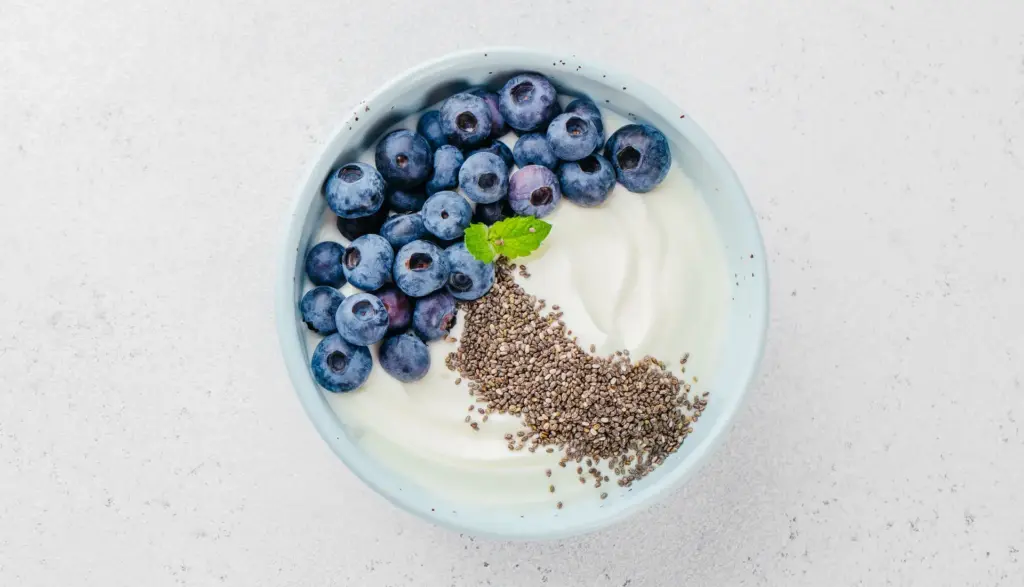
Mixed berry cottage cheese bowl
Cottage cheese gives this bowl most of its protein in a small serve, and it takes five minutes. If a whole bowl feels like too much, eat half now and half later.
You will need:
- 1 cup cottage cheese
- 1 cup mixed berries
- 1 tbsp chia seeds
- 1 tsp honey (optional)
When to get help: if you are losing weight without trying, struggling to eat or drink, feeling weak, or have side effects from a medicine that stop you eating, see your doctor. If food or weight is a source of worry or you have a history of an eating disorder, please talk to your doctor or an eating disorder dietitian before changing how you eat.
Getting enough when you are not hungry
How much protein you need, and how to fit it in when your appetite is small, depends on your age, weight, health conditions, medicines and side effects. Felicity can build a plan around what you can manage, whether your appetite is low because of age, illness or medication.
Felicity Bull is an Accredited Practising Dietitian. She sees clients in person in Mount Hutton (Newcastle and Lake Macquarie) and by telehealth across Australia. About GLP-1 medication support.
Book with Felicity →Common questions
What are good high-protein snacks?
Cottage cheese, Greek-style yoghurt, boiled eggs, cheese, canned tuna, hummus, milk or milky drinks, and edamame.
How can I eat more protein when I am not hungry?
Have small amounts often, choose protein-dense foods like eggs, cheese, tuna and cottage cheese, and use milky drinks if food is hard to manage.
How much protein do older adults need?
European guidelines recommend at least 1 g of protein per kilogram of body weight a day for older people, adjusted to the person.
Why does protein matter on GLP-1 medication?
These medicines reduce appetite, which can make it harder to eat enough protein. Adequate protein and strength training help preserve lean mass while losing weight.
How much protein is in cottage cheese?
About 17 g per 100 g, according to the Australian Food Composition Database.
Where this comes from
General information only, not personal advice. It does not replace advice from your doctor or dietitian.
- Volkert D, Beck AM, Cederholm T, et al. ESPEN practical guideline: clinical nutrition and hydration in geriatrics. Clinical Nutrition. 2022;41:958-989. www.espen.org/files/ESPEN-Guidelines/ESPEN_practical_guideline_Clinical_nutrition_and_hydration_in_geriatrics.pdf
- healthdirect Australia. Malnutrition (reviewed August 2025). www.healthdirect.gov.au/malnutrition
- Dietitians Australia and Exercise and Sports Science Australia. Multidisciplinary models of care for GLP-1 medications: joint statement (September 2026). dietitiansaustralia.org.au/sites/default/files/2026-09/Multidisciplinary%20models%20of%20care%20for%20GLP-1%20medications%20-%20Joint%20Statement.pdf
- Mozaffarian D, Agarwal M, Aggarwal M, et al. Nutritional priorities to support GLP-1 therapy for obesity: a joint advisory from the American College of Lifestyle Medicine, the American Society for Nutrition, the Obesity Medicine Association and The Obesity Society. Obesity. 2025;33(8):1475-1503. pmc.ncbi.nlm.nih.gov/articles/PMC12304835/
- Neeland IJ, Linge J, Birkenfeld AL. Changes in lean body mass with glucagon-like peptide-1-based therapies and mitigation strategies. Diabetes, Obesity and Metabolism. 2024;26 Suppl 4:16-27. pubmed.ncbi.nlm.nih.gov/38937282/
- Food Standards Australia New Zealand. Australian Food Composition Database, Release 3 (December 2025): nutrient profiles, caffeine (analysed values per 100 g or 100 mL). www.foodstandards.gov.au/science-data/food-nutrient-databases/afcd/data-files