
Choline: Why You Need More During Pregnancy and Breastfeeding (Australian Guide)
Choline is an essential nutrient that helps brain growth, liver health, and cell membranes. During pregnancy and breastfeeding, your body’s need for choline rises a lot to support both you and your baby. This guide explains what choline does, why needs increase, the best Australian food sources, how many eggs you would need to meet targets, what to expect from prenatal vitamins, and simple tips for vegetarians.
To explore related support options, you can review AusClin’s Choline Calculator for more clinically guided context.
What Choline Does in Pregnancy and Breastfeeding
Choline acts like a building block for every cell in the body. It is needed to make phospholipids, the fats that form cell membranes. It also supports healthy fat handling in the liver. For a developing baby, this structure work is constant and very fast.
Choline also provides the raw material for acetylcholine. This is a neurotransmitter that helps with memory, attention, and muscle control. During fetal development, it supports growth of the brain and spinal cord. It also, much like folic acid, works with folate to lower the risk of neural tube defects such as spina bifida.
Another key job of choline is in methylation. This is a chemical process that helps turn genes on or off at the right time. It can affect long-term metabolism and brain function. During pregnancy and breastfeeding, methylation demands are high as organs form and grow.
For mothers, enough choline supports liver function. It helps move fat out of the liver and may lower the risk of fatty liver during and after pregnancy. Choline also passes into breast milk, so your intake affects how much your baby receives during breastfeeding.
To understand how this fits into a wider nutrient picture, AusClin’s general women’s health guidance can provide helpful context around other key vitamins and minerals.
Why Choline Needs Increase in Pregnancy and Breastfeeding
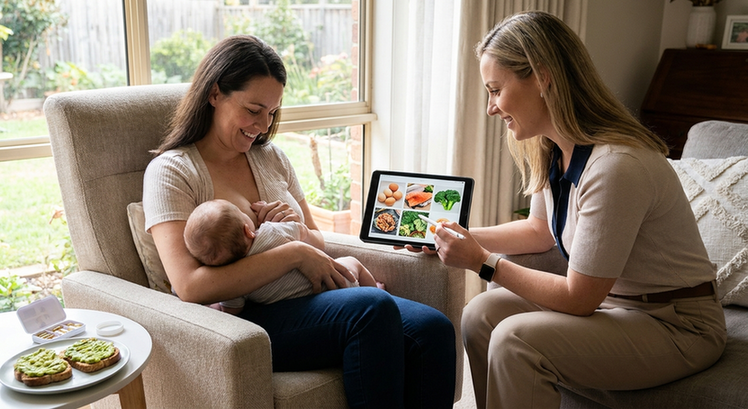
Choline needs rise during pregnancy because your baby cannot make enough on their own. They rely on your supply. Large amounts of choline move across the placenta to support rapid cell division, especially in the brain and nervous system. This extra transfer adds to your own daily needs for liver health and normal metabolism.
So, just how much more do you need? Australian Adequate Intake (AI) values set pregnancy needs at around 440 – 450 mg per day. These rise to about 550 mg per day during breastfeeding. Breastfeeding places an even greater demand on your stores because your body concentrates choline into breast milk. This supports your infant’s brain growth and myelin formation (the protective coating around nerves). At the same time, your own tissues are healing from birth and still need choline for cell repair. Newer international research suggests optimal intakes may be a bit higher for some women. Needs can also vary with genetics and your overall diet.
Studies suggest that many pregnant women worldwide do not reach these intake levels. Some analyses estimate this at around 80 – 90%. In Australia, intake data for women of reproductive age suggest that most fall short of recommended choline levels unless they eat choline-rich foods every day.
If you have questions about your individual needs, AusClin’s contact page can help you arrange personalised guidance with a qualified clinician.
Best Australian Food Sources of Choline (and How Many Eggs You’d Need)
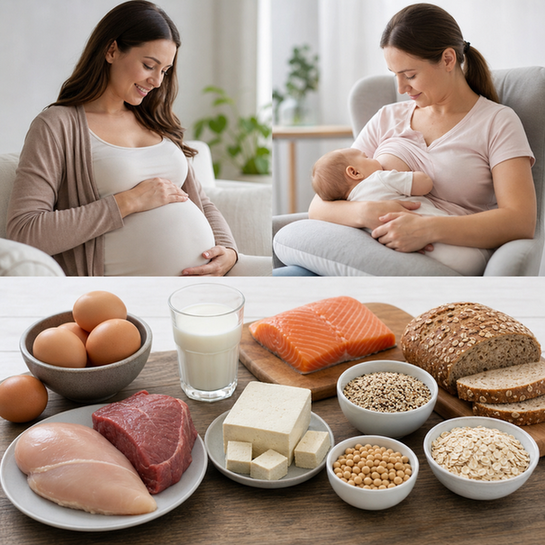
In Australia, the richest and most practical food source of choline is whole eggs. A large egg typically provides around 125 – 150 mg of choline, mostly in the yolk. To meet a pregnancy target near 450 mg per day using eggs alone, you would usually need about three eggs per day. For breastfeeding needs of around 550 mg, that may rise to about four eggs per day.
Most people will not rely only on eggs, of course. Other foods that give useful amounts of choline include lean red meat and chicken, fish, milk, yoghurt, cheese, and some beans and lentils. Wheat germ, soy products, and some nuts and seeds also provide smaller amounts that add up across the day.
A sample day might include two scrambled eggs at breakfast, a chicken and salad sandwich at lunch, and a small portion of beef or salmon at dinner. For more ideas, our choline-boosting recipe finder can help you plan meals across the week. Dairy and whole grains can support this pattern. That mix can bring many women close to pregnancy targets without feeling like a strict “egg diet”.
In real life, food intake varies. Some days will be lighter in these foods, especially during early pregnancy nausea or times of food aversion. Planning your intake across the week, perhaps with the help of a qualified dietitian, can help balance these ups and downs.
For a deeper look at how choline intake may fit into a broader nutrition plan, AusClin’s clinical services overview outlines the type of support available through dietetic care.
Do Prenatal Vitamins Provide Enough Choline?

But can’t you just get it from a prenatal vitamin? As many prenatal vitamin guides point out, probably not. Standard multivitamins in Australia often include no choline. Others provide only small amounts, around 50 – 100 mg. This covers just a small part of your daily needs. This gap usually comes down to simple logistics. Choline is a bulky nutrient, and it is hard to fit a useful dose into a single capsule with folate, iron, and vitamin D. Without strong food sources, your intake will likely stay below recommended levels.
Some products are now sold with higher choline content. These may use forms like choline bitartrate or phosphatidylcholine. Even then, these supplements are made to top up a choline-rich diet, not replace it fully. Therapeutic doses or high-dose products should only be used with guidance from your GP or an Accredited Practising Dietitian.
The most practical path for many women uses a mix of food, a standard prenatal, and, where needed, extra choline advised by one of our AusClin clinicians. Reading labels for “choline” on the back of prenatal bottles can give a quick sense of how much support you are actually getting. You can also run your product through our prenatal supplement checker to see whether it includes enough choline.
To compare this with your broader supplement choices, you may find AusClin’s blog articles on nutrient gaps and supplementation helpful as you discuss options with your healthcare team.
Vegetarian and Egg-Free Tips for Meeting Choline Needs
Meeting choline needs on a vegetarian or egg-free diet takes more careful planning, as many of the richest sources are off the menu. For lacto-ovo vegetarians, eggs and dairy remain key foods. For vegans, the focus shifts to soy products (like tofu and soy milk), chickpeas, lentils, kidney beans, quinoa, and some nuts and seeds.
Building a steady intake might look like a tofu stir-fry for dinner, hummus with wholegrain crackers for a snack, and soy milk with breakfast. These foods all help, but reaching the 440 – 550 mg per day target from plants alone can be hard. Because of this, and as part of determining your individual needs, many vegetarian women discuss targeted supplementation with their GP or an APD, especially during late pregnancy and breastfeeding. Diet assessment and risk factors guide these talks, as blood tests do not yet give a simple picture of choline status.
If you are plant-based and pregnant or breastfeeding in Newcastle or nearby, a tailored consult with an APD can make this feel far more manageable and far less like guesswork day to day.
Conclusion and Next Steps
Choline supports your baby’s brain and nervous system, your liver, and every cell membrane in your body. During pregnancy and breastfeeding, needs rise, yet many Australian women fall short. This is more likely if they eat few eggs or animal foods and rely on prenatals that contain little choline.
A simple first step is to check your current intake of eggs, dairy, meat, and legumes. Our free choline calculator can estimate how close your usual intake is to pregnancy and breastfeeding targets. From there, you can adjust meals, read supplement labels more closely, and discuss personalised options. If you would like evidence-based support from one of our accredited dietitians to review your choline intake and broader pregnancy nutrition, please connect with a clinician through AusClin’s contact page.
Frequently Asked Questions
What is choline and why is it important in pregnancy and breastfeeding?
Choline is an essential nutrient used to build cell membranes, support liver function, and make the neurotransmitter acetylcholine, which is important for memory, attention and muscle control. In pregnancy and breastfeeding, it helps your baby’s brain and nervous system develop, supports methylation (gene regulation), and reduces the risk of neural tube defects when combined with adequate folate.
How much choline do I need when pregnant and how much when breastfeeding in Australia?
Australian Adequate Intake (AI) guidelines suggest most pregnant women need about 440–450 mg of choline per day. During breastfeeding, requirements increase further to around 550 mg per day to cover your own needs and the choline that passes into breast milk.
What are the best food sources of choline in an Australian diet?
In Australia, the richest sources of choline are eggs (especially the yolk), beef and chicken, liver, fish, and dairy products. Smaller amounts are also found in legumes, nuts, seeds, and wholegrains, but it’s harder to meet pregnancy targets from plant foods alone without careful planning.
How many eggs a day would I need to meet choline needs in pregnancy?
A large egg contains roughly 120–150 mg of choline, mainly in the yolk. To reach the pregnancy target of around 440–450 mg per day from eggs alone, you’d need about 3 eggs daily, though most people meet their needs with a mix of eggs plus other choline-rich foods like meat, fish and dairy.
Do most prenatal vitamins in Australia contain enough choline?
Many standard prenatal multivitamins in Australia contain little or no choline, or include amounts that are well below pregnancy and breastfeeding targets. If you rely on a prenatal alone, you may not reach the 440–550 mg per day guideline, so it’s important to check the label and discuss extra choline or diet changes with a clinician.
How can I tell if my prenatal supplement has adequate choline for pregnancy?
Look for “choline” on the ingredient list and check the milligrams (mg) per tablet or daily dose against your target of 440–450 mg in pregnancy or 550 mg while breastfeeding. If the supplement only provides a small fraction of this (for example 50–100 mg), you’ll need to rely on food sources or a separate choline product to close the gap under professional guidance.
What are good choline sources if I’m vegetarian or don’t eat much meat?
For vegetarians, eggs and dairy are usually the most practical choline sources, so including them regularly can make a big difference. Plant foods like soy products, legumes, nuts, seeds and wholegrains add smaller amounts, and some vegetarians may benefit from tailored supplementation after reviewing their intake with a dietitian or clinician.
Can low choline intake in pregnancy affect my baby’s brain development?
Emerging research suggests that inadequate choline during pregnancy may impact fetal brain development, including memory and attention pathways, and can influence how genes are switched on or off (methylation). While more research is ongoing, getting enough choline alongside folate appears to support healthy neural tube development and long-term brain health.
Is it safe to get choline from eggs every day while pregnant?
For most healthy pregnant women in Australia, eating properly cooked eggs regularly is safe and an efficient way to boost choline. The main cautions are to avoid raw or undercooked eggs due to food safety and to balance overall saturated fat intake; if you have high cholesterol or other conditions, seek personalised advice from your healthcare provider.
How can AusClin help me with choline and pregnancy nutrition?
AusClin provides clinically guided information and resources on choline, pregnancy and women’s health, helping you understand your specific nutrient needs. Their materials can support discussions with your healthcare provider about diet, lab testing and whether a targeted choline or prenatal strategy is appropriate for you.
Choline is one of several nutrients that rise in pregnancy. Talk to a prenatal dietitian →
Based near Newcastle? Our rooms are in Mount Hutton, and we also see clients by telehealth. See our dietitian in Newcastle & Lake Macquarie page →